
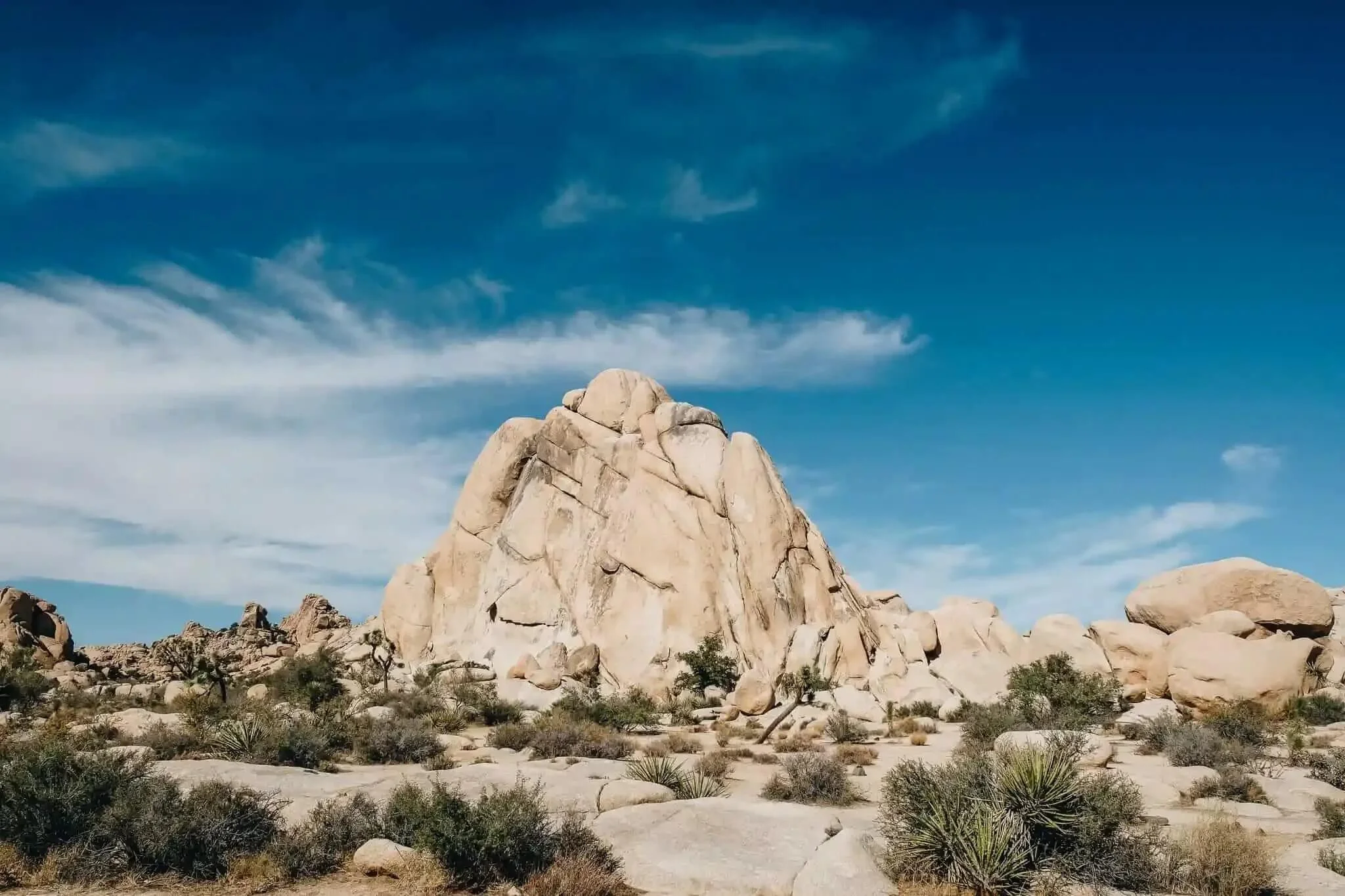
Hidden Valley Rock Climbing in Joshua Tree
Hidden Valley is the most visited climbing area in Joshua Tree National Park, and for good reason. Short approaches, hundreds of routes, and some of the park's most iconic crack climbs are all concentrated in one area. Whether you're new to outdoor climbing or chasing a classic trad route, Hidden Valley is usually where a Joshua Tree climbing day begins.
Located near the heart of the park, Hidden Valley provides quick approaches, stunning scenery, and hundreds of climbing opportunities spread across boulders, walls, and towering formations. For many climbers, it serves as the perfect introduction to Joshua Tree climbing.
Location: Central Joshua Tree National Park
Climbing Style: Trad, Top Rope, Sport, Bouldering
Skill Levels: Beginner to Advanced
Best Season: Fall, Winter, Spring
Typical Route Length: 40–120 feet
Approach Time: 1–15 minutes
Planning Resources
Joshua Tree National Park Climbing Regulations
Official NPS guidelines for climbing in the parkLeave No Trace Principles
Climbing ethics and low-impact practices for outdoor climbers
Local Guide Tip: Hidden Valley is one of Joshua Tree's busiest climbing areas. Arriving early often means cooler temperatures, easier parking, and fewer climbers on popular routes.
Looking to explore Hidden Valley with a local guide?
Learn more about our Joshua Tree Rock Climbing Guides →
Why Climbers Love Hidden Valley
A lot of climbing areas claim variety. Hidden Valley actually delivers it.
Easy Access
Most routes here are a 1 to 15 minute walk from the parking area. That means more time climbing and less time hiking. It also means you can bounce between formations throughout the day and cover a lot of ground without a big commitment.
Classic Crack Climbing
Joshua Tree is famous for its crack climbing, and Hidden Valley is where a lot of that reputation was built. The area's quartz monzonite granite produces an unusually high concentration of hand cracks, finger cracks, and off-width routes — the kind of climbing that rewards technique over raw power and keeps people coming back.
Desert Scenery That Actually Delivers
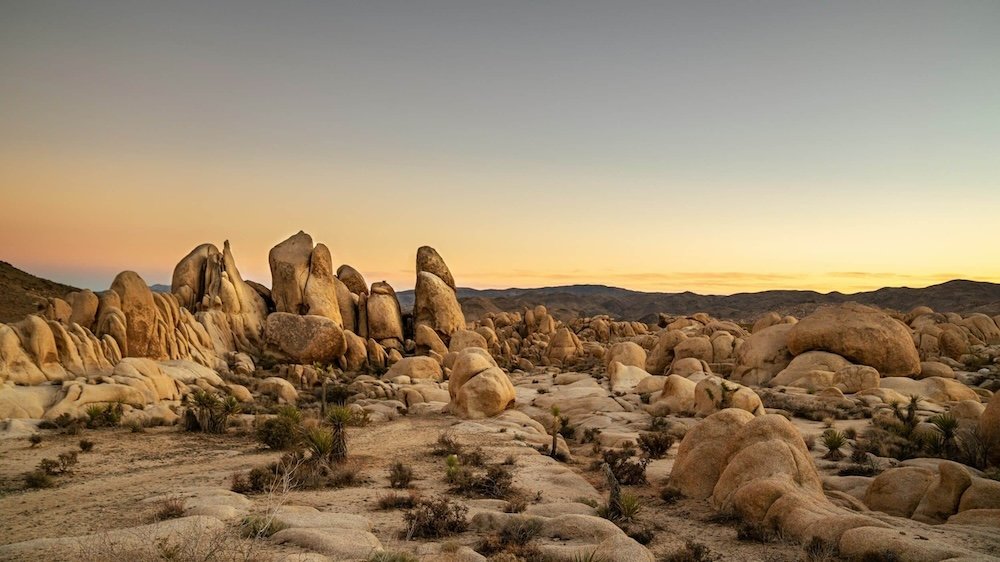
Towering granite formations, twisted Joshua Trees, and sweeping desert views — it looks exactly like the photos, and somehow still manages to surprise you when you're standing in it.
Something for Every Skill Level
From 5.4 top-rope routes to sustained trad climbs well above 5.10, Hidden Valley has legitimate options across the full skill spectrum. It's one of the few areas in the park where a group of mixed experience levels can all find routes worth climbing on the same day.
A Climbing History Worth Knowing
Hidden Valley played a central role in shaping Joshua Tree climbing culture. The park's most celebrated routes were established here during an era that helped define what traditional climbing looks like in the American West. In the 1970’s this was the territory of the Stonemasters. Legendary climbers like John Bachar, Lynn Hill, John Long, Mike Lechlinski, John Lablonski and a long list of others made their mark here.
Best Climbs In Hidden Valley
Hidden Valley is the epicenter for climbing in Joshua Tree. This is where climbers want to stay and play during their time here.
Double Cross (5.7+)
A classic hand crack that has just enough spice to keep you on your toes. Good protection for the most part, with a bolted anchor that makes for an easy retreat. (Pro tip bring a #4 Camelot to protect the start if you are nervous)
Grade: 5.7+
Type: Trad
Why Climbers Love It: Classic movement, excellent gear, and a route that feels bigger than its grade suggests.
The Eye (5.4)
A beginner-friendly route with awesome exposure. The climbing is a steep and slippery so it is not a great first lead for a budding 5.4 leader. Easily setup as a top rope, the somewhat scary lead can be avoided.
Grade: 5.4
Type: Trad / Top Rope
Why Climbers Love It: Accessible climbing with an unforgettable finish and minimal approach.
Toe Jam (5.7)
A staple of Hidden Valley and a perfect introduction to Joshua Tree crack climbing. The movement is all about trusting your feet on the slab and in the cracks. Often recommended as an early trad lead for climbers building confidence outdoors.
Grade: 5.7
Type: Trad
Why Climbers Love It: A clean, honest crack climb in a great location — exactly what Joshua Tree is known for.
Sail Away (5.8)
One of the best moderate crack climbs in Hidden Valley. Sustained movement on high-quality granite, excellent protection, and the kind of climbing that makes you want to turn around and do it again. Consistently cited as a must-do for climbers visiting the area for the first time.
Grade: 5.8
Type: Trad
Why Climbers Love It: Sustained quality from bottom to top with some of the best rock in the area.
Climbing Areas Within Hidden Valley
Hidden Valley Campground Area
The heart of it all. Many of the park's most celebrated formations are clustered around the campground, and the climbing ranges from easy top-rope routes to serious trad climbs. If you only have one day in the park, this is where most people end up — and for good reason.
Real Hidden Valley
The Real Hidden Valley is a densely packed climbing area. Featuring a variety of single pitch crags and a few multi-pitch options as well. Less crowded than the campground area and worth the extra few minutes to reach.
Intersection Rock
One of the most recognizable formations in Joshua Tree and a favorite for climbers of every level. Intersection Rock has long single pitch cracks and a few short multi-pitch climbs to the summit. The short approach and central location make it one of the most practical climbing spots in Hidden Valley.
Turtle Rock
One of the best spots in the park for new outdoor climbers. Turtle Rock has short approaches, solid top-rope setups, and approachable routes that are genuinely fun rather than just easy. A favorite for families, first-timers, and anyone making the transition from the gym to real rock.
Exploring beyond Hidden Valley? Indian Cove or Cap Rock is worth a day of its own — quieter, more beginner-friendly, and a completely different feel.
Beginner Climbs In Hidden Valley
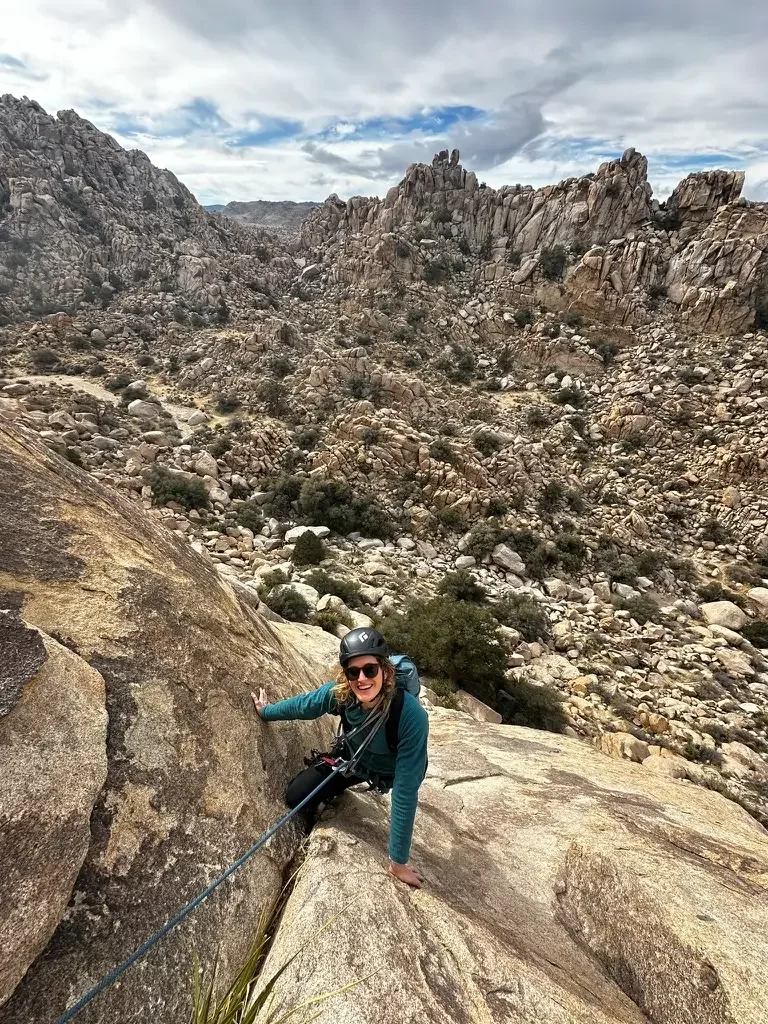
Hidden Valley is consistently recommended as one of the best places in Joshua Tree to start climbing outdoors. The approaches are short, the route variety is real, and the environment is forgiving enough to learn in without feeling like you're missing out.
Good starting objectives for newer climbers include:
The Eye 5.4— fun movement, exiting exposure, minimal approach to Chimney Rock
Upper Right Ski Track 5.3— Great intro to lead follow style climbing on Intersection Rock, with an awesome rappel
Easy Day 5.3 — Super fun varied route up Turtle Rock with a bolted anchor
If you're making the jump from gym to outdoor climbing, Hidden Valley is one of the most inviting places to do it. The approaches are straightforward, and the community of climbers in the area is always welcoming.
Vertical Adventures Joshua Tree Rock Climbing Guides work with new outdoor climbers regularly and know exactly which routes build the right skills without overwhelming you on day one.
Intermediate & Advanced Climbs
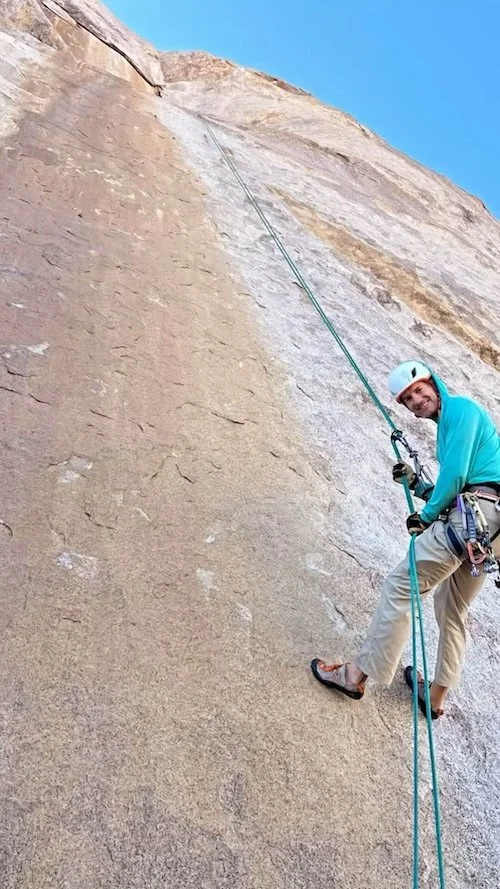
More experienced climbers will find no shortage of objectives here. Joshua Tree's crack climbing demands real technique -- precise footwork, confident gear placement, and the ability to read a route before committing. Hidden Valley has a deep inventory of routes that reward that skill set.
The area goes well beyond the moderate classics:
Harder trad lines that require confident gear placement and route reading
Steeper face climbs that demand precise footwork and body positioning
Longer crack systems for climbers ready to push into bigger terrain
Technical routes that will satisfy experienced climbers looking for a challenge
Route finding can be tricky given the high density of formations, so a guidebook or solid local knowledge goes a long way.
If you're working toward leading trad routes outdoors or want to push into more technical terrain, our Advanced Climbing Courses are built specifically around those goals.
Learn to Climb in Hidden Valley
Hidden Valley is one of the best outdoor classrooms in the country. Short approaches and a wide variety of route styles make it an ideal place to develop real outdoor climbing skills in a setting that doesn't feel contrived.
Vertical Adventures runs guided courses at all levels in Joshua Tree, including:
Intro to Outdoor Rock Climbing — for first-time outdoor climbers building confidence on real rock
Intermediate Outdoor Rock Climbing — refine technique and become more efficient outside
Learn to Lead— lead climbing systems, movement, and decision-making
Climbing Anchors Course — gear placement, anchor systems, and independent climbing skills
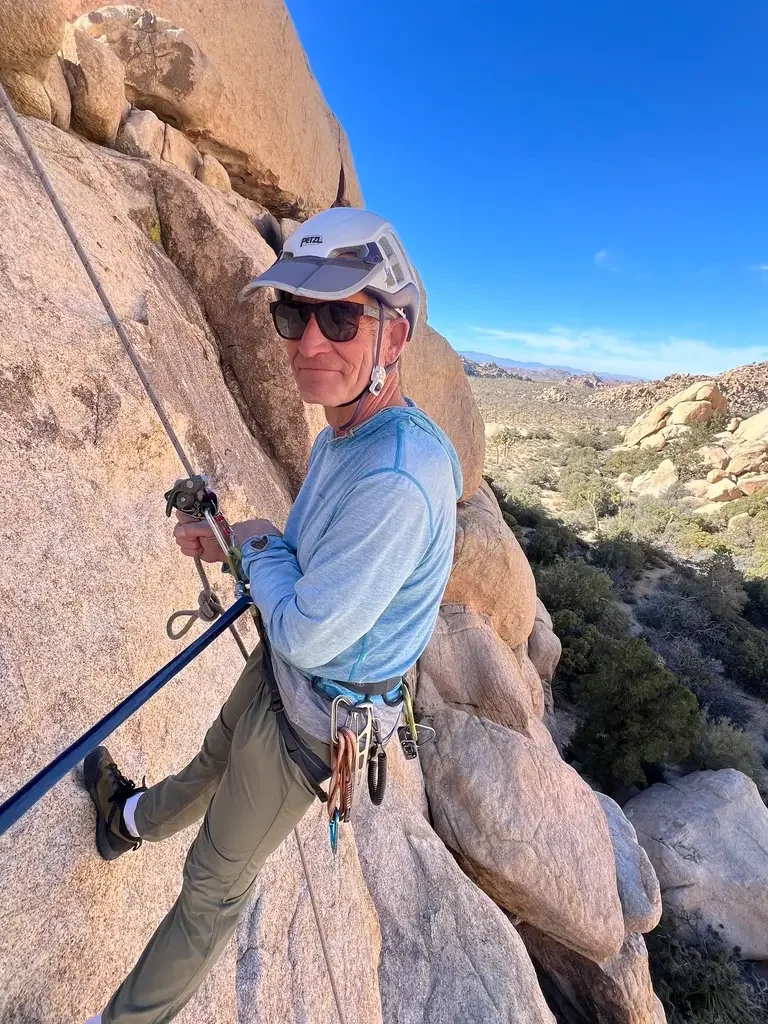
Climbing Hidden Valley With a Local Guide
Hundreds of routes spread across dozens of formations means a lot of decisions before you ever touch the rock. Working with a guide removes that friction and replaces it with more actual climbing.
Our Joshua Tree Rock Climbing Guides have spent years in this park. They know which routes suit which skill levels, which formations get sun at which times of day, and how to build a day that gets the most out of wherever you're at. Whether you're new to outdoor climbing or chasing a specific objective, a guide makes Hidden Valley more accessible and more productive.
“Vertical Adventures tailors every session to your experience level, making climbing both challenging and fun."
-Kimlien Le
What To Know Before Climbing Hidden Valley
Approaches
Most routes are within a 1 to 15 minute walk. That's one of the area's biggest advantages — you can try multiple formations in a single day without spending hours on the approach.
The Crowds
Hidden Valley is busy, especially on weekends in peak season. Early starts are worth it — you'll get cooler temperatures and better odds on the popular routes.
Route Finding
The high concentration of formations and routes can make navigation confusing for first-time visitors. A guidebook, Mountain Project, or a local guide makes a significant difference. What looks obvious from the parking area often isn't once you're in among the rocks.
Rock Quality
Generally excellent. The monzonite granite here is part of what makes Joshua Tree climbing so distinctive. That said, always check holds and assess conditions before committing to a move, especially on less-traveled routes.
Best Time To Climb Hidden Valley
Fall
Cooler temperatures, stable weather, and some of the best friction of the year. Fall is peak season for a reason — plan accordingly and arrive early on weekends
Spring
Longer days, comfortable temperatures, and wildflowers in the desert. Spring brings out a lot of visitors, but the conditions are genuinely good and the extra daylight gives you more options.
Winter
On a clear winter day, Hidden Valley climbing is hard to beat. Cool temps produce exceptional friction, and the park is quieter than fall. Some days require an extra layer at the base, but once you're moving it's usually fine.
Summer
Extreme midday heat makes summer climbing in Hidden Valley challenging. Early morning starts are essential. Some climbers make it work — shaded north-facing routes stay cooler longer — but summer requires more planning and more caution than the other seasons.
Explore More Joshua Tree Climbing Areas
Frequently Asked Questions
-
Yes, and it's one of the better beginner areas in the park. Short approaches, a variety of easy to moderate routes, and formations like Cyclops Rock and Intersection Rock make it a natural starting point. The Eye at 5.4 is a particularly good first outdoor climb.
-
Double Cross, Toe Jam, Sail Away, and The Eye are consistently at the top of most people's lists. They span a range of grades and cover what makes Hidden Valley climbing worth doing.
-
For trad climbing, a standard rack covering small to large hand sizes is a good starting point for most routes. Bring climbing shoes, a harness, and a helmet. Specific rack requirements vary by route — check Mountain Project or a current guidebook for details.
-
Fall, winter, and spring offer the best conditions. October through May is generally considered peak season. Summer is doable with early starts but requires extra planning.
-
Yes. Our Joshua Tree Rock Climbing Guides offer private guided climbs and instruction for all experience levels, from first-timers to experienced trad climbers.
-
Trad is the dominant style, but top-rope and bouldering opportunities are plentiful, especially for newer climbers. There's very limited sport climbing in the area.
-
Most routes are within 1 to 15 minutes of the parking area. It's one of the most accessible climbing areas in the park.
-
Yes. Cyclops Rock and select routes around Intersection Rock are well-suited for families and younger climbers. Our guided experiences accommodate all ages.